API Integration Strategies That Streamline Fraud Detection in Cross-Border Subscription Models
Yves Washington · May 15, 2026
API Integration Strategies That Streamline Fraud Detection in Cross-Border Subscription Models
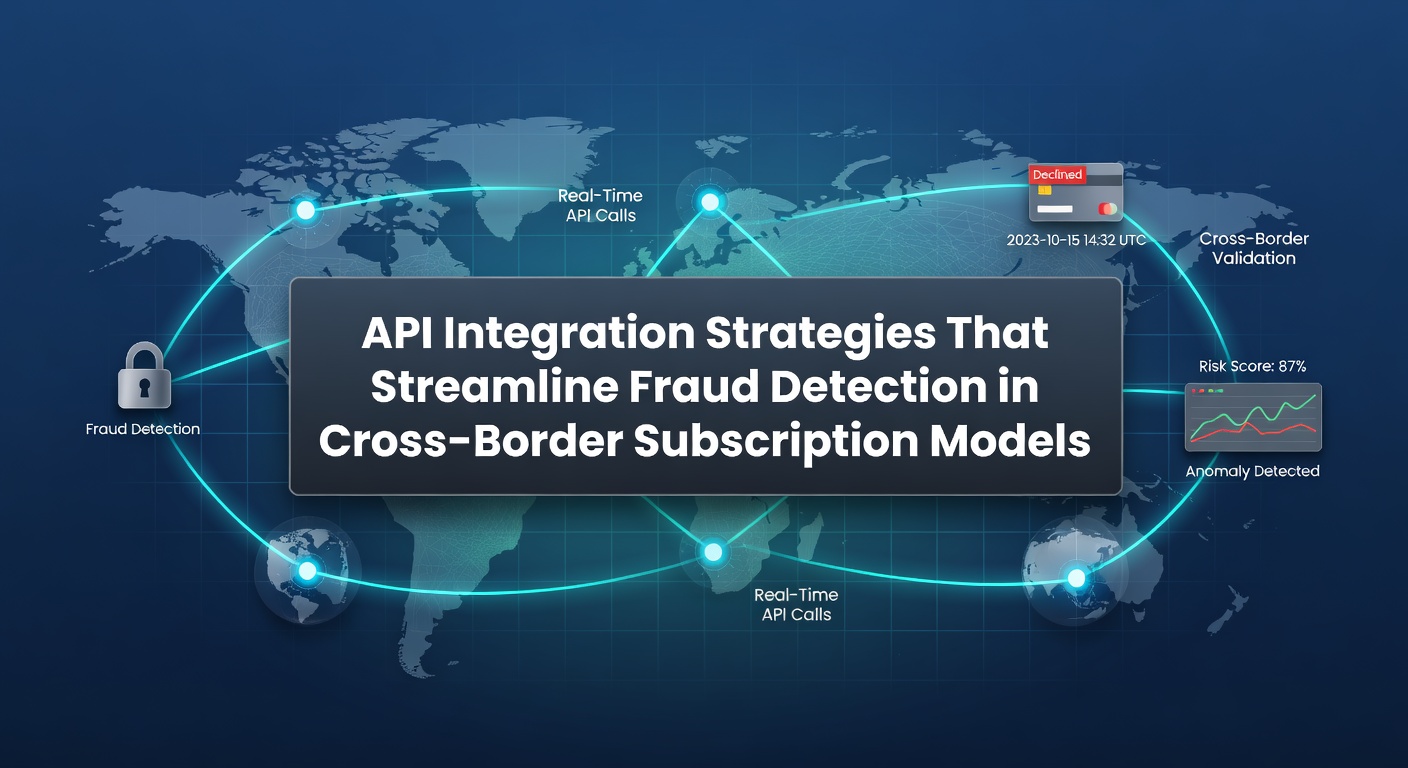
Cross-border subscription models rely on seamless payment flows that span different currencies, regulatory frameworks, and customer behaviors, yet these same elements create opportunities for sophisticated fraud schemes. API integrations allow platforms to pull live verification data from multiple sources at the moment a user initiates or renews a subscription, reducing delays while tightening security controls. Companies connect their billing systems directly to third-party risk engines through standardized endpoints, enabling instant scoring of each transaction based on device fingerprints, IP geolocation patterns, and historical payment velocity.
Core API Components for Real-Time Verification
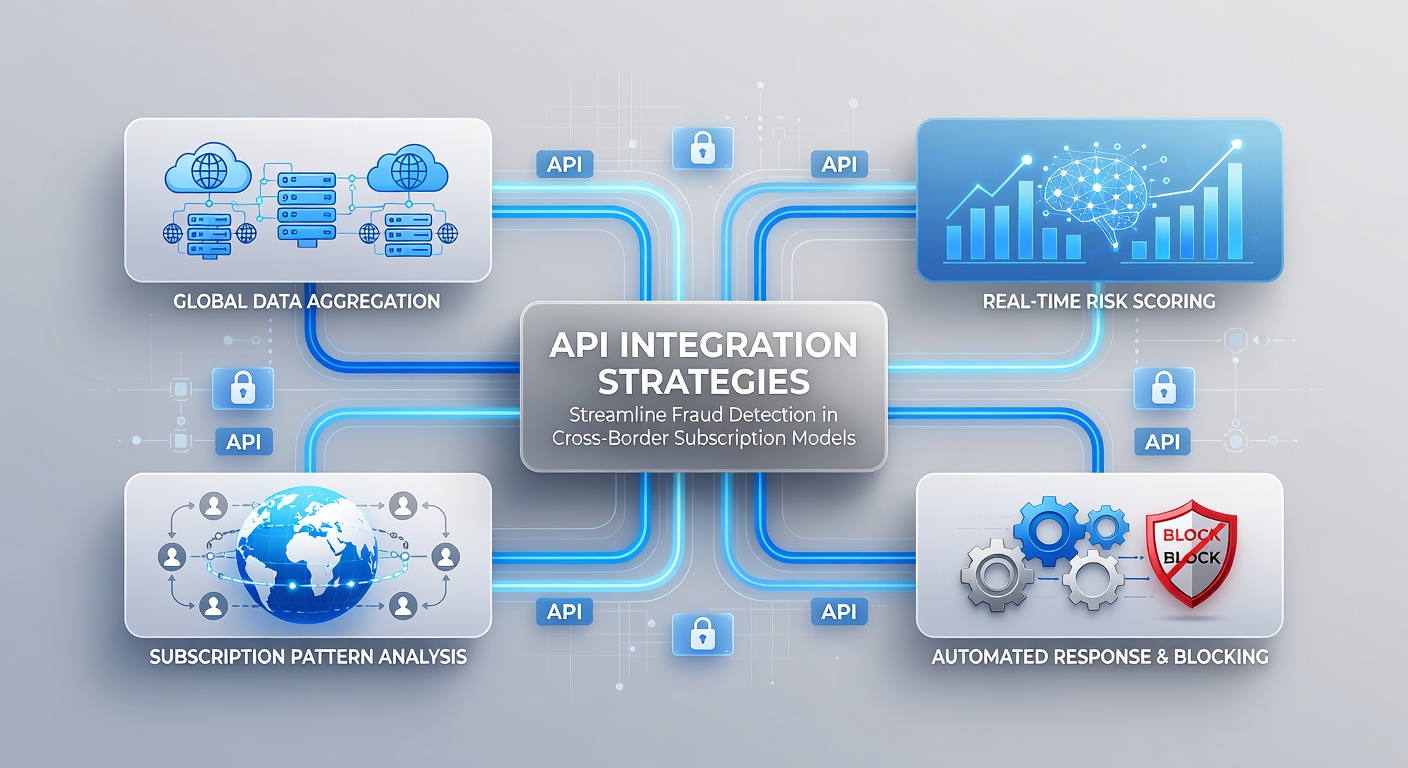
Effective strategies begin with layered API calls that combine identity checks, card authentication, and behavioral analytics in a single workflow. Developers structure these calls so the primary billing API triggers secondary queries to fraud databases without interrupting the checkout experience. In practice, one endpoint handles initial tokenization while another simultaneously queries global watchlists maintained by financial regulators across North America, Europe, and Asia-Pacific regions. This parallel processing keeps average response times under 300 milliseconds, a threshold many platforms adopted following infrastructure updates in early 2026.
Embedding Machine Learning Through External APIs
Subscription services increasingly route transaction data to specialized machine learning APIs that maintain continuously updated models trained on regional fraud patterns. Rather than building internal algorithms from scratch, teams configure secure data pipelines that send anonymized features such as billing frequency, device consistency, and cross-border IP mismatches. The external models return probability scores that feed directly into decision rules, allowing automatic approval, manual review, or immediate decline. Research from academic centers in Canada has shown that hybrid approaches combining local rules with global ML outputs cut false positives by up to 40 percent compared with standalone systems.
Regulatory Data Feeds and Compliance Hooks
Integration strategies also incorporate direct connections to official regulatory feeds that update in near real time. Platforms link to government-maintained databases for sanctioned entities and high-risk jurisdictions, ensuring each new subscriber passes automated screening before recurring charges activate. The Australian Competition and Consumer Commission publishes open data sets that several fintech providers now consume via dedicated APIs, flagging patterns associated with subscription stacking and friendly fraud. These connections operate alongside PCI-DSS tokenization services, creating a closed loop where compliance status influences fraud scoring thresholds dynamically.
Observers note that successful implementations use idempotent API designs so repeated calls during network hiccups do not trigger duplicate fraud checks or customer notifications. Webhook subscriptions further streamline operations by pushing updated risk signals back to the billing system whenever a card issuer reports new chargeback data or a device appears on emerging threat lists. In May 2026 several major cloud providers released enhanced regional endpoints that automatically route these webhooks through the nearest compliance node, reducing latency for European and Latin American merchants alike.
Handling Multi-Region Data Residency Requirements
Data residency rules vary sharply across borders, so integration architects design API gateways that enforce region-specific routing before any personal information leaves the originating country. Tokenized identifiers replace raw account details in transit, satisfying both local privacy statutes and the operational needs of global fraud models. One documented case involved a European streaming service that configured its API layer to strip geolocation metadata when routing requests to North American scoring engines, preserving compliance while still receiving accurate risk assessments.
Teams also implement circuit-breaker patterns within their API clients so temporary outages at any single provider do not halt the entire subscription flow. Fallback logic switches to secondary verification partners within milliseconds, maintaining service continuity while logging the incident for later analysis. Industry reports indicate that platforms using these resilient patterns experienced 25 percent fewer subscription interruptions during peak fraud campaigns observed throughout 2025 and into 2026.
Monitoring and Iterative API Tuning
Continuous monitoring dashboards aggregate API response metrics, false-positive rates, and chargeback ratios across every supported market. Developers set automated alerts that trigger when a particular endpoint begins returning higher latency or when regional fraud spikes exceed baseline thresholds. These insights feed back into configuration updates, allowing fine-tuning of scoring weights without redeploying core billing code. Several large-scale operators now schedule quarterly reviews of their API integrations, incorporating fresh data sets released by international financial oversight bodies.
Conclusion
API integration strategies that streamline fraud detection in cross-border subscription models center on real-time data exchange, machine learning connectivity, regulatory feed consumption, and resilient architecture design. Organizations that maintain these connections see measurable reductions in fraudulent sign-ups and chargebacks while preserving checkout speed across diverse markets. As payment ecosystems evolve, the emphasis remains on modular, standards-based APIs that adapt quickly to new threats and compliance requirements without disrupting recurring revenue streams.