Exploring Tokenization Protocols for Mitigating Risks in Multi-Currency Recurring Merchant Setups
Sam Hoffmann · May 22, 2026

Exploring Tokenization Protocols for Mitigating Risks in Multi-Currency Recurring Merchant Setups
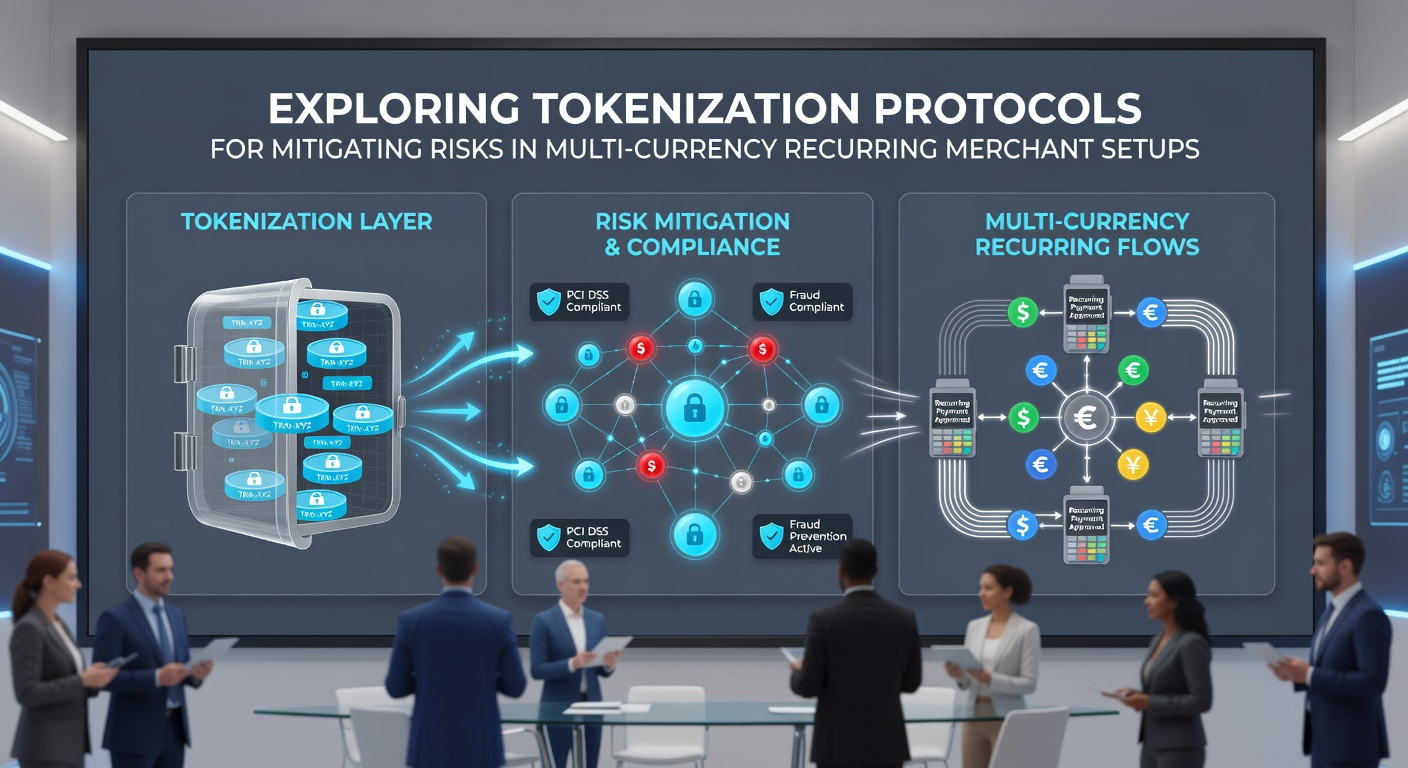
Tokenization replaces sensitive payment card data with unique identifiers that hold no intrinsic value outside secure systems, and this approach has gained traction among merchants handling recurring charges across multiple currencies because it limits exposure during each billing cycle. Observers note that when transactions span borders and repeat on fixed schedules, the volume of stored credentials creates entry points for unauthorized access, yet tokenization severs that direct connection while preserving the ability to process future payments through reference to the original token.
Merchants operating subscription models encounter distinct challenges when currencies fluctuate daily and regulatory requirements differ by jurisdiction, and researchers have documented how these factors compound the risk of data interception during authorization requests. Tokenization protocols address this by mapping each token to a specific payment instrument and merchant identifier, which means that even if a token leaks, it cannot be reused elsewhere without the corresponding cryptographic keys held in isolated vaults.
Core Mechanics of Tokenization in Recurring Multi-Currency Environments
Payment networks issue tokens through defined protocols that include generation, storage, and lifecycle management, while merchants request new tokens during initial customer onboarding and then reference those same tokens for subsequent billing events. In multi-currency setups the protocol layers often incorporate currency-specific metadata so that the token service provider can apply the correct exchange rate at the moment of each charge without exposing the underlying card details.
Data from industry reports shows that tokenization reduces the scope of PCI DSS compliance audits because the merchant no longer retains primary account numbers after the initial transaction, and this reduction becomes especially relevant when recurring charges cross regulatory boundaries. Systems that combine tokenization with dynamic currency conversion maintain separate ledgers for each supported currency, ensuring that the token itself remains neutral while the settlement engine handles conversion at prevailing rates.
Risk Categories Addressed by Established Protocols
Common risks include account takeover during recurring authorization, exposure of stored credentials in merchant databases, and fraud that exploits timing differences between billing cycles in different time zones. Tokenization protocols counter these threats by enforcing strict domain controls that restrict token use to the original merchant and the approved payment network, which prevents the token from functioning on unauthorized sites or in different regions.
Studies from academic institutions indicate that merchants adopting tokenization experience measurable declines in chargeback rates linked to data breaches, and this pattern holds across subscription services that bill in more than one currency. Protocols also incorporate token rotation schedules, where the service provider issues replacement tokens at regular intervals so that any compromised identifier loses validity before it can be exploited over multiple billing periods.
Protocol Variations and Regional Implementation Patterns
EMVCo tokenization standards provide a framework adopted by major card networks, yet individual providers layer additional controls such as merchant-specific encryption and usage frequency limits that adapt to recurring billing patterns. In regions where cross-border data transfer rules tightened after May 2026 updates from the European Payments Council, tokenization has allowed merchants to keep tokenized references locally while routing only non-sensitive metadata through international gateways.
North American implementations often integrate token vaults operated by acquirers, and these vaults support multi-currency reconciliation by attaching exchange rate snapshots to each token record at the time of creation. Australian regulatory guidance from the Reserve Bank of Australia emphasizes audit trails for token issuance and redemption, which helps merchants demonstrate compliance when recurring charges occur in both local and foreign currencies.
Operational Considerations During Deployment
Integration begins with mapping existing customer payment methods to new tokens, a step that requires coordination between the merchant platform and the chosen token service provider to avoid service interruptions in active subscriptions. Once tokens replace stored card data, billing engines reference the token identifier along with the intended currency and amount, and the provider detokenizes only at the authorization stage before returning a response that the merchant can log without sensitive details.
Systems must accommodate failed authorizations that trigger retry logic, and token protocols include status flags that allow the merchant to pause or cancel future charges without needing to retrieve original card information. Research indicates that organizations running parallel tokenization pilots alongside legacy storage observe faster fraud detection because alerts focus on token usage anomalies rather than raw card data patterns.
Conclusion
Tokenization protocols continue to evolve in response to the specific demands of multi-currency recurring merchant operations, and the separation of sensitive data from operational records remains central to their effectiveness. As payment networks refine domain controls and regional regulators issue updated guidance, merchants gain additional tools for managing recurring transactions while limiting the persistence of payment credentials across billing cycles and currency boundaries.