How Niche Software Teams Build Protected Revenue Cycles Using Developer Tools for Worldwide Client Billing Without Standard Account Barriers
Ulrich Baumann · Jul 24, 2026
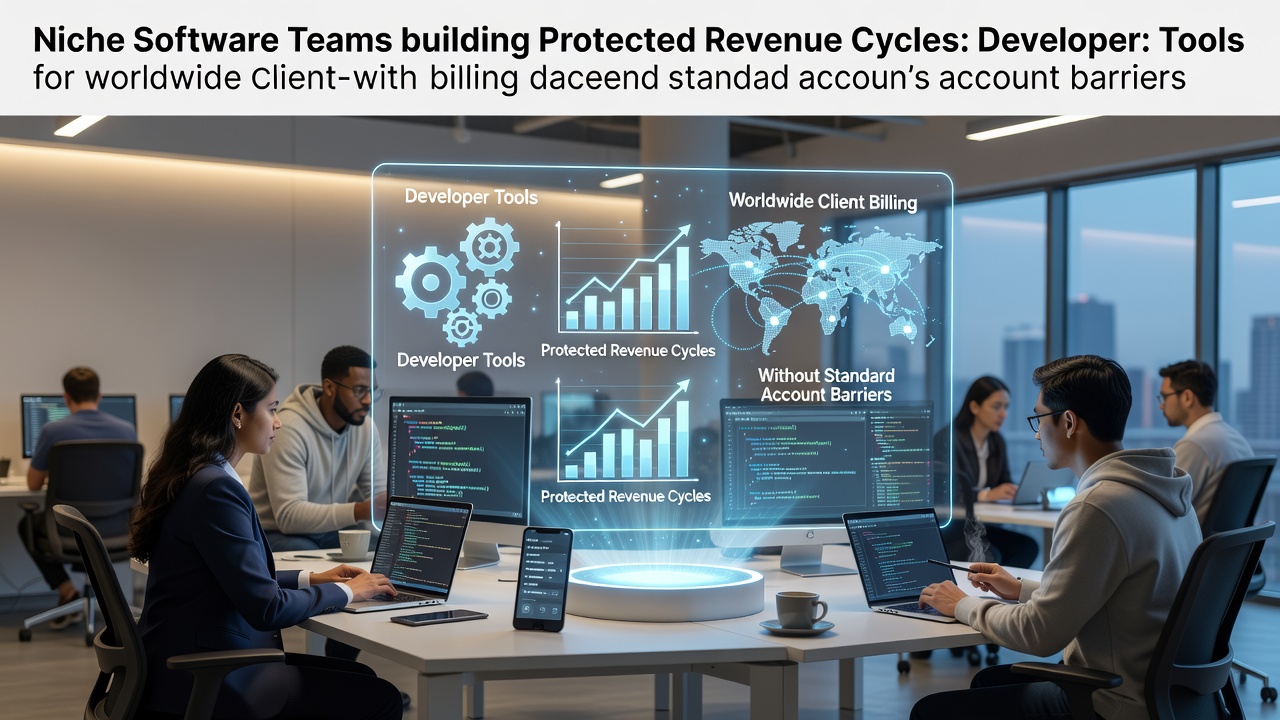
How Niche Software Teams Build Protected Revenue Cycles Using Developer Tools for Worldwide Client Billing Without Standard Account Barriers
Niche software teams have developed methods to establish protected revenue cycles by integrating developer tools that handle worldwide client billing directly through APIs and SDKs, sidestepping the requirements of conventional merchant accounts that often involve lengthy approvals and geographic restrictions. These approaches rely on platforms offering embedded payment capabilities where teams configure recurring charges, apply local payment methods, and manage currency conversions within codebases rather than through separate banking relationships. Data from cross-border payment analyses indicate that such setups reduce onboarding times from weeks to hours in many cases, allowing teams focused on specialized verticals like project management software or niche analytics platforms to serve clients across continents without establishing local entities in each market.
Core Mechanisms in Developer-Driven Billing Systems
Teams begin by embedding billing logic into their applications using libraries that support subscription models with built-in retry mechanisms and dunning sequences, which maintain revenue flow even when initial attempts fail due to expired cards or regional banking issues. Developers connect these tools to client databases so that billing events trigger automatically based on usage metrics or fixed intervals, while the underlying infrastructure handles tax calculations and compliance reporting for multiple jurisdictions. According to reports from the Bank for International Settlements, cross-border payment volumes reached significant levels by mid-2025, with projections showing continued growth into 2026 driven by software-as-a-service models that bypass traditional account setups.
Protected cycles emerge when these systems incorporate fraud detection at the code level through real-time risk scoring that flags unusual patterns before transactions complete. Niche teams customize these rules to match their client profiles, such as B2B software users who operate in regulated industries, ensuring that revenue remains consistent without manual intervention for each billing cycle. In July 2026, industry observers noted increased adoption of these developer-centric methods as regulatory frameworks in regions like teh EU and Asia-Pacific evolved to support open banking standards that facilitate direct integrations.
Global Reach Through Configurable Toolsets
Worldwide client billing becomes feasible when teams leverage developer tools supporting multiple currencies and local payment rails, such as bank transfers in Europe or digital wallets in Southeast Asia, all routed through a single integration point. This eliminates the need for separate accounts in each country by using orchestration layers that route transactions based on client location data pulled from user profiles. Research from the Monetary Authority of Singapore highlights how such configurations have enabled smaller technology providers to expand into new markets while maintaining control over billing parameters directly in their development environments.

One example involves teams building custom webhooks that update subscription statuses across time zones, ensuring that billing dates align with client operational cycles rather than arbitrary cutoffs. These setups also include automated settlement features that distribute funds to the software provider's primary accounts, often in their base currency, after converting and deducting applicable fees at the point of transaction. Teams in fields like specialized engineering software have documented how this method supports client bases spanning North America, Europe, and Australia without additional banking infrastructure.
Security Layers and Revenue Stability
Security protocols form the backbone of protected revenue cycles through encryption standards applied at the API level combined with token management that replaces sensitive client data with references stored only on the provider side. Developers implement these by following documentation from tool providers that outline step-by-step configuration for recurring authorizations, which renew automatically under client consent frameworks. Figures from the European Central Bank reveal steady increases in adoption of tokenized recurring payments, correlating with reduced dispute rates in cross-border scenarios.
Teams further stabilize cycles by incorporating usage-based billing modules that calculate charges dynamically from application logs, then invoice accordingly while applying regional tax rules through integrated calculation engines. This approach suits niche markets where client needs vary widely, allowing adjustments via code updates rather than account-level changes. Observers note that such flexibility has proven valuable for teams targeting clients in emerging economies where traditional merchant accounts remain difficult to obtain.
Conclusion
Niche software teams continue to refine these developer tool integrations to sustain revenue cycles that operate reliably across borders while minimizing reliance on standard account processes. The combination of API-driven automation, localized payment support, and embedded compliance features provides a pathway for consistent billing operations that scale with client growth. As payment infrastructures evolve, these methods position specialized teams to maintain operational focus on product development rather than administrative banking requirements.