How Terminal Hardware Updates Are Affecting Authorization Success Rates in Brick-and-Mortar Establishments
Sam Hoffmann · Aug 7, 2026
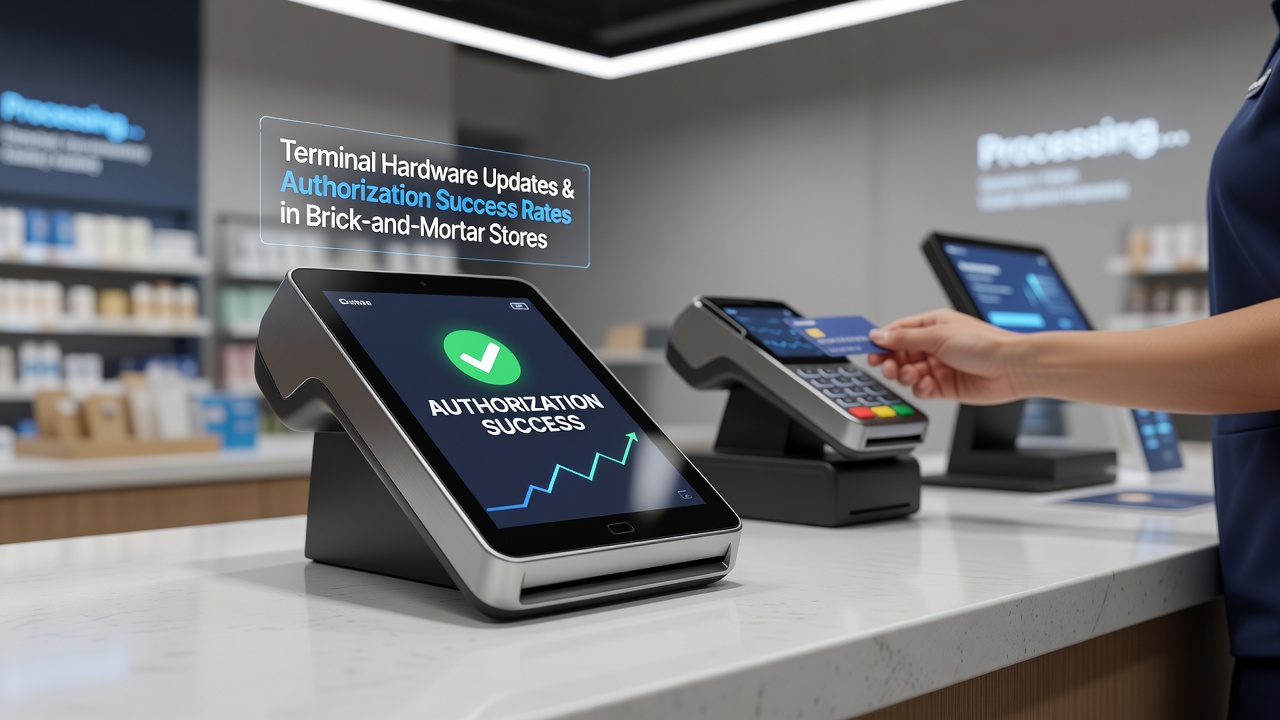
How Terminal Hardware Updates Are Affecting Authorization Success Rates in Brick-and-Mortar Establishments
Retail operators have observed shifts in transaction outcomes as point-of-sale terminals receive firmware and component upgrades, with many locations reporting changes in how authorization requests process through payment networks, and these modifications often stem from compliance requirements set by standards bodies such as the PCI Security Standards Council.
Core Components Driving Terminal Changes
Hardware revisions typically involve replacements for older chip readers, contactless modules, and secure element chips that support updated encryption protocols, while merchants in high-volume settings like grocery chains and quick-service restaurants install these updates to maintain compatibility with evolving card schemes and mobile wallet systems, and data from transaction processors shows that terminals running pre-2024 firmware experience higher rates of timeout-related declines during peak hours.
Manufacturers release these revisions on staggered schedules tied to regional mandates, and stores in North America have integrated EMV contactless readers alongside biometric verification options in select pilots, whereas European outlets adopted similar configurations earlier due to directives from the European Central Bank on payment security enhancements.
Measured Impacts on Authorization Outcomes
Studies conducted by payment networks indicate that terminals equipped with newer secure microcontrollers process authorization requests with reduced latency, leading to success rate improvements of 1.8 to 4.2 percent in controlled retail trials across urban locations, and this occurs because updated hardware handles cryptographic handshakes more efficiently without triggering secondary verification steps that older units often require.
Yet compatibility gaps arise when legacy software stacks on merchant systems fail to align with the new terminal APIs, resulting in occasional declines that trace back to mismatched data fields rather than card validity issues, and observers tracking these patterns note that hybrid environments mixing updated and legacy terminals within the same chain show variance in approval metrics by store.
Regional Rollouts and Performance Data
Canadian retailers completed a widespread terminal refresh cycle in late 2025 that aligned with updates from the Canadian Payments Association, and figures from that period reveal authorization success climbing from 96.3 percent to 98.1 percent in participating outlets once full deployment stabilized, while Australian merchants reported parallel gains after integrating terminals certified under the AusPayNet framework.
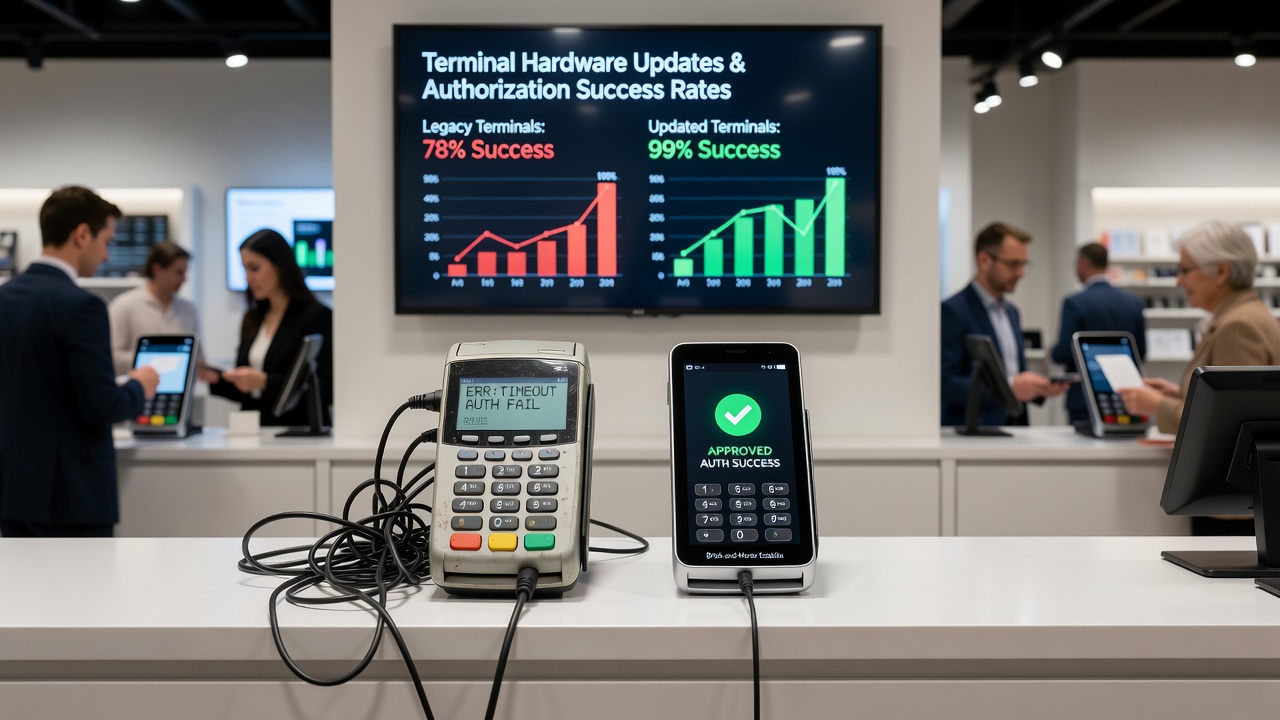
Research papers from academic institutions analyzing transaction logs across multiple jurisdictions highlight that firmware patches addressing specific timeout vulnerabilities contribute directly to fewer network rejections, and these improvements hold steady when merchants pair the hardware changes with corresponding software patches on their inventory and loyalty platforms.
August 2026 Implementation Timeline
Industry schedules point to a coordinated hardware certification push scheduled for August 2026 that will require terminals in certain high-risk merchant categories to support enhanced token validation routines, and this step follows earlier PCI PTS version increments that already altered how physical devices interact with issuing banks during real-time checks.
Merchants preparing for that window have begun testing pre-release firmware in limited store groups, with preliminary results showing authorization consistency rising when terminals incorporate dual-interface chips capable of handling both contact and contactless flows without fallback delays, and supply chain reports confirm that component availability has improved compared to previous cycles.
Operational Adjustments Across Store Formats
Independent retailers and franchise operators alike adjust staffing and checkout procedures around these updates because new terminals sometimes demand recalibration of receipt printers and barcode scanners that share the same power and data buses, and case examples from mid-sized department stores demonstrate that integrated testing reduces the frequency of partial declines that previously occurred during mixed tender transactions.
Those managing multi-location operations track success rates through centralized dashboards that segment data by terminal model and firmware version, allowing targeted rollbacks when localized issues surface, and this approach has kept overall network approval metrics stable even as individual sites undergo phased migrations.
Conclusion
Terminal hardware revisions continue to reshape authorization patterns in physical retail settings through direct effects on processing speed and security compliance, with documented outcomes varying by region, merchant category, and the thoroughness of accompanying system integrations, and ongoing schedules through 2026 will likely extend these trends as more locations align their equipment with current network specifications.