Inside Niche Platforms Managing Encrypted Global Charge Cycles via Streamlined Account Setups
Quinn Wolf · May 29, 2026

Inside Niche Platforms Managing Encrypted Global Charge Cycles via Streamlined Account Setups
Platforms specializing in niche payment solutions handle encrypted global charge cycles through setups that simplify account creation while maintaining security across borders, and researchers at institutions like the Bank for International Settlements have documented how these systems process recurring transactions with layered encryption protocols that protect data during international transfers.
Charge cycles refer to the recurring billing sequences that occur in subscription models or automated payment plans, and when these operate globally the platforms encrypt transaction details using standards such as AES-256 to prevent interception while data moves between jurisdictions, with data from the National Institute of Standards and Technology showing that encryption adoption in financial services reached 87 percent among compliant providers by early 2025.
Core Mechanisms in Encrypted Charge Processing
Systems begin by generating unique encryption keys during each cycle initiation, then apply them to card details and billing information before storage occurs on distributed servers, and this approach allows platforms to manage volume spikes without compromising individual transaction integrity even as charges cross multiple time zones and regulatory environments.
Encryption Layers and Compliance Integration
Multiple encryption stages combine symmetric and asymmetric methods to secure both at-rest and in-transit data, while compliance checks run automatically against frameworks including PCI-DSS and regional data protection rules, and observers note that platforms often embed these checks into the initial setup flow so that account activation does not require separate verification steps.
Account setups streamline through automated identity verification that pulls from verified third-party databases rather than manual document uploads, and this reduces onboarding time from days to minutes while still satisfying anti-money laundering requirements in participating countries.
Global Operations and Regional Adaptations
Platforms adjust charge cycle parameters based on local currency fluctuations and tax obligations, routing encrypted data through regional nodes that apply jurisdiction-specific rules without exposing raw information, and studies from the European Central Bank indicate that such localized processing cut cross-border settlement times by an average of 34 percent in tested networks during 2025.
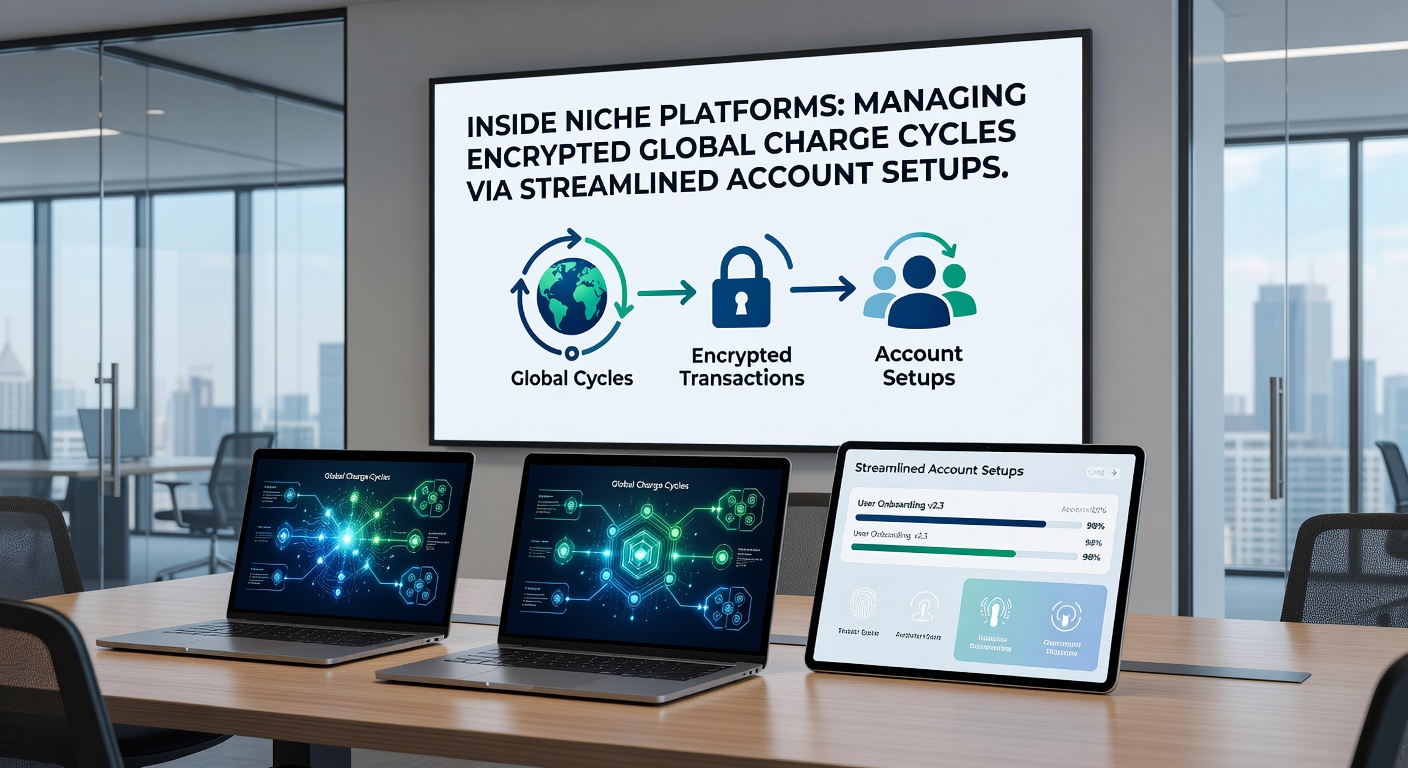
By May 2026 several platforms had incorporated updates aligned with emerging ISO 20022 messaging standards, enabling smoother integration of encrypted recurring payments into existing banking infrastructures across Asia-Pacific and North American markets simultaneously.
Account Setup Workflows in Practice
Users start with a minimal data entry screen that captures essential details, after which the system initiates background encryption and validation processes that run in parallel, and this parallel execution allows the platform to confirm eligibility and generate secure access credentials without forcing sequential delays that frustrate customers in time-sensitive industries.
- Automated KYC pulls from government registries in supported regions
- Real-time risk scoring applied before key generation completes
- Multi-factor authentication tokens issued within the same session
Take one mid-sized platform operating across 40 countries that reported handling over 2.1 million encrypted charge cycles monthly in late 2025, with account creation averaging under 90 seconds per user according to internal metrics shared in industry reports.
Security Outcomes and Performance Metrics
Encryption at the cycle level limits exposure windows during each billing event, and platforms monitor these windows through centralized dashboards that flag anomalies without decrypting full datasets, while figures from the Reserve Bank of Australia reveal that similar encrypted systems experienced 62 percent fewer reported data incidents compared to non-encrypted recurring billing setups in comparable periods.
Streamlined setups further support scalability by allowing dynamic addition of new payment rails without full re-onboarding, and this flexibility proves useful when platforms expand into emerging markets where regulatory environments shift rapidly.
Conclusion
Niche platforms continue refining encrypted global charge cycle management by embedding security directly into streamlined account processes, and ongoing developments in standards bodies worldwide suggest these approaches will expand as transaction volumes grow through 2026 and beyond.