The Interplay of Regulatory Shifts and API Configurations in Subscription Payout Networks for Platform Operators
Mara Simon · Jul 31, 2026
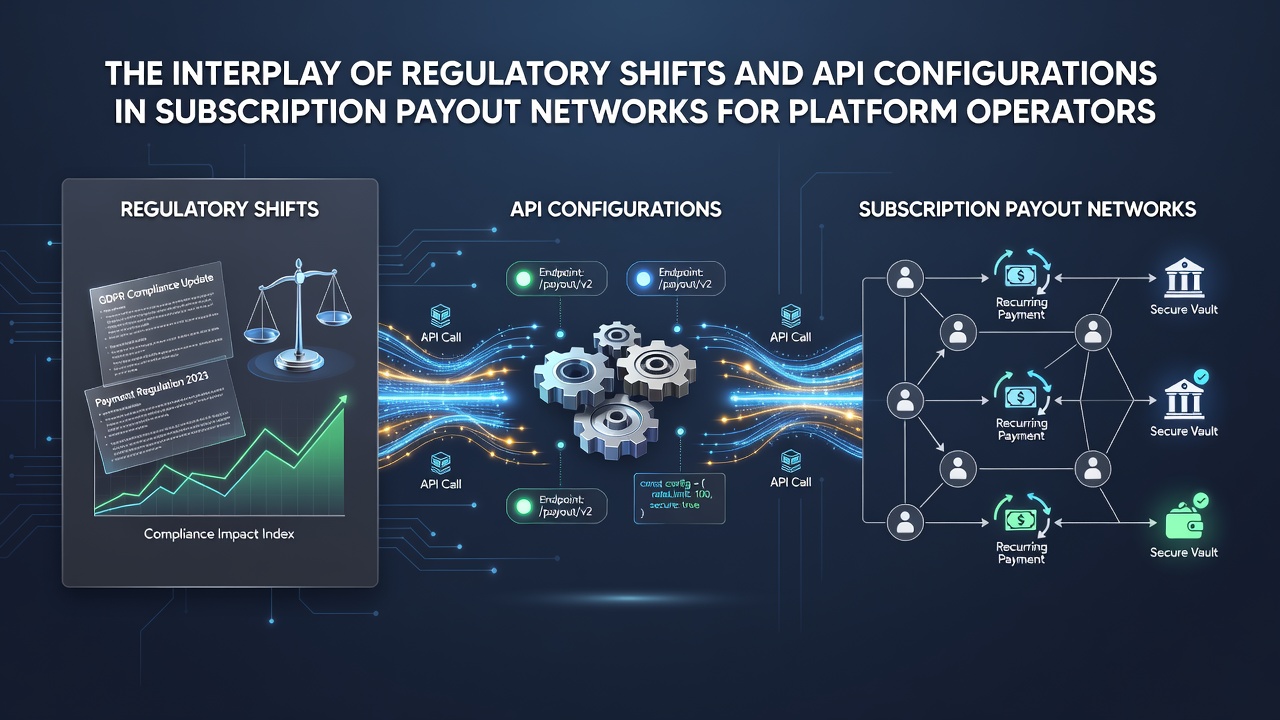
The Interplay of Regulatory Shifts and API Configurations in Subscription Payout Networks for Platform Operators
Regulatory changes continue to reshape how platform operators manage subscription payout networks, and these shifts directly affect the way APIs handle transaction routing, compliance checks, and settlement timing. Data from industry reports shows that operators must adjust API endpoints to accommodate new reporting requirements and data localization rules that take effect across multiple jurisdictions. In July 2026, updates to cross-border data transfer standards in several regions require platforms to reroute payout requests through verified API gateways that enforce real-time validation against updated regulatory databases.
Regulatory Developments Affecting Payout Networks
Platform operators encounter evolving rules from bodies such as the European Commission and the Monetary Authority of Singapore that mandate stricter oversight of recurring payment flows. These rules specify how operators document subscriber consent, store transaction metadata, and disclose fee structures during each payout cycle. Observers note that API configurations must now include additional fields for audit trails, which allows systems to capture consent timestamps and jurisdiction flags without disrupting settlement speed. Research indicates that operators who integrate these fields early reduce processing delays when new rules activate.
API Adjustments for Compliance Layers
API configurations serve as the technical bridge between regulatory mandates and daily payout operations, so developers embed compliance modules directly into authentication sequences and response handlers. One study revealed that platforms using modular API designs can swap out validation services when regulators introduce fresh requirements, such as enhanced beneficiary screening for certain subscription tiers. Those who've studied this process find that endpoint versioning becomes essential because older API versions often lack support for the granular data fields demanded by updated statutes.
What's interesting is how these configurations interact with liquidity management tools. Operators configure APIs to pause or reroute payouts when regulatory signals indicate heightened scrutiny in specific markets, and this prevents settlement failures that could otherwise trigger additional reporting obligations. Figures from transaction monitoring services show that such automated pauses occur more frequently following policy announcements from regional authorities.
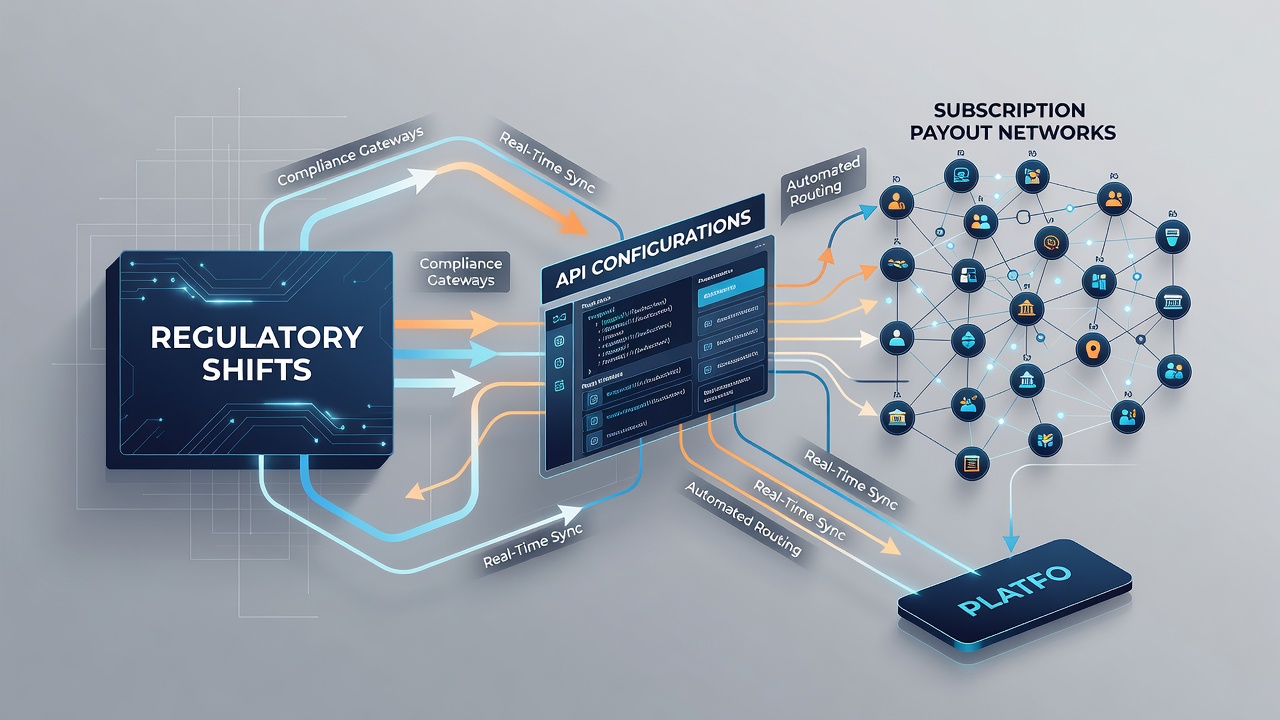
Technical Integration Patterns Observed in Practice
Platform teams frequently adopt event-driven architectures that trigger API calls in response to regulatory updates published through official feeds. This approach lets systems pull revised tax withholding tables or sanctioned entity lists and apply them to ongoing subscription cycles without manual intervention. Data shows that operators who connect their payout APIs to these feeds experience fewer compliance gaps during transitions between regulatory regimes.
Take one case where experts examined a North American platform that reconfigured its settlement API to accommodate new Canadian disclosure rules on foreign exchange markups. The team added conditional logic that flags cross-border payouts and appends required statements before funds leave the network. Such changes illustrate how API flexibility supports adherence to rules that differ by region and subscription type.
Settlement Timing and Reporting Requirements
Regulatory shifts also influence the timing parameters built into payout APIs. New standards in several jurisdictions require operators to hold funds for extended verification periods when subscriber patterns match certain risk profiles. API endpoints therefore incorporate delay flags that synchronize with these hold periods while still meeting contractual obligations to content creators or service providers. According to transaction data aggregated by research institutions, platforms that embed these timing controls report smoother audits and fewer reconciliation discrepancies.
Yet operators must balance these controls against subscriber expectations for prompt payouts. API configurations now often include fallback routes that direct verified transactions through accelerated channels while routing others through standard compliance queues. This dual-path method keeps overall network throughput stable even as regulatory layers multiply.
Future Considerations for Platform Operators
As additional rules emerge, platform operators continue to refine API configurations to maintain compatibility across evolving regulatory environments. Studies from academic sources highlight the value of maintaining comprehensive test suites that simulate new compliance scenarios before they become mandatory. These preparations allow teams to validate payout accuracy and documentation completeness under simulated conditions that mirror July 2026 requirements and beyond.
Conclusion
The connection between regulatory shifts and API configurations in subscription payout networks remains a central operational concern for platform operators. Evidence from multiple regions demonstrates that well-structured APIs enable timely adaptation to new rules on consent, data handling, and settlement timing. Operators who prioritize modular designs and automated feeds position their networks to handle ongoing changes while preserving service reliability for subscribers and recipients alike.