Tracing Data Pathways Between Online Gateways and Supply Chain Software in Manufacturing Sectors
Mara Simon · Aug 21, 2026
Tracing Data Pathways Between Online Gateways and Supply Chain Software in Manufacturing Sectors
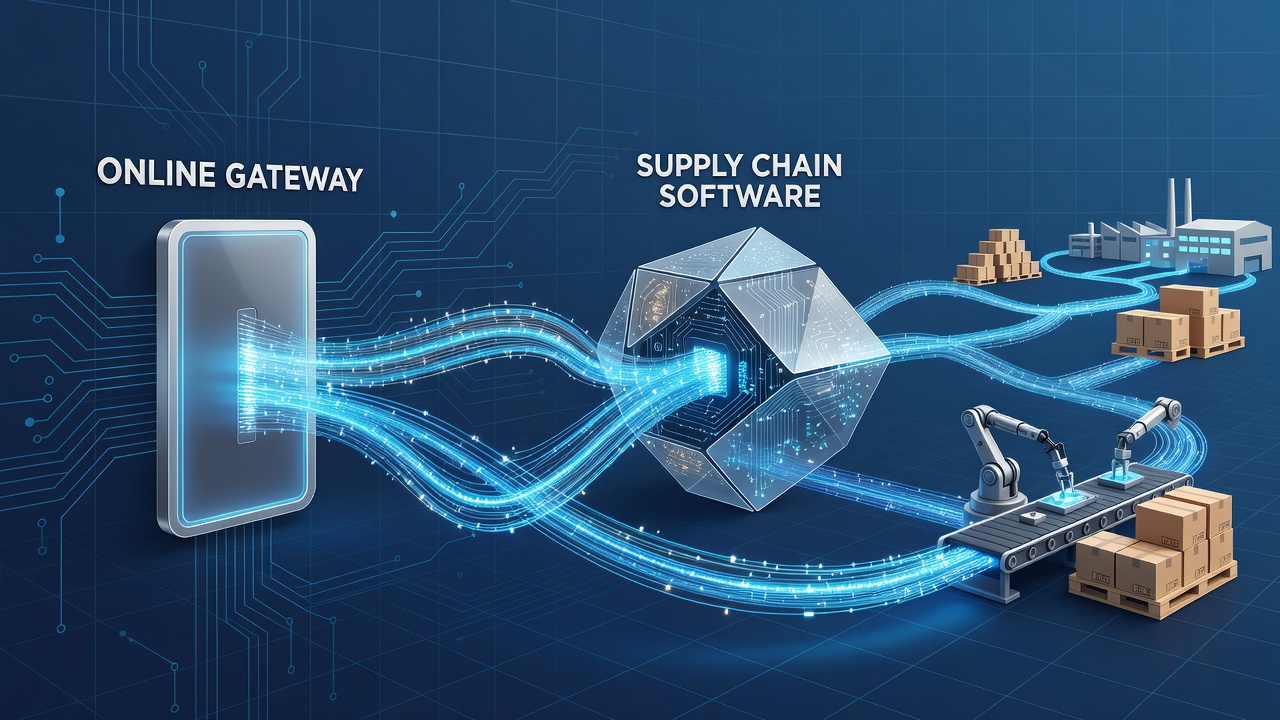
Manufacturing operations rely on precise coordination between payment processing systems and inventory management tools, where data moves through structured channels that connect financial transactions directly to production schedules and material sourcing. Online gateways handle authorization requests while supply chain platforms track component availability, and the pathways between these systems determine how quickly orders convert into fulfilled shipments. Researchers at institutions focused on industrial systems have mapped these flows to identify points where delays or mismatches occur during high-volume production cycles.
Core Components of Gateway and Supply Chain Integration
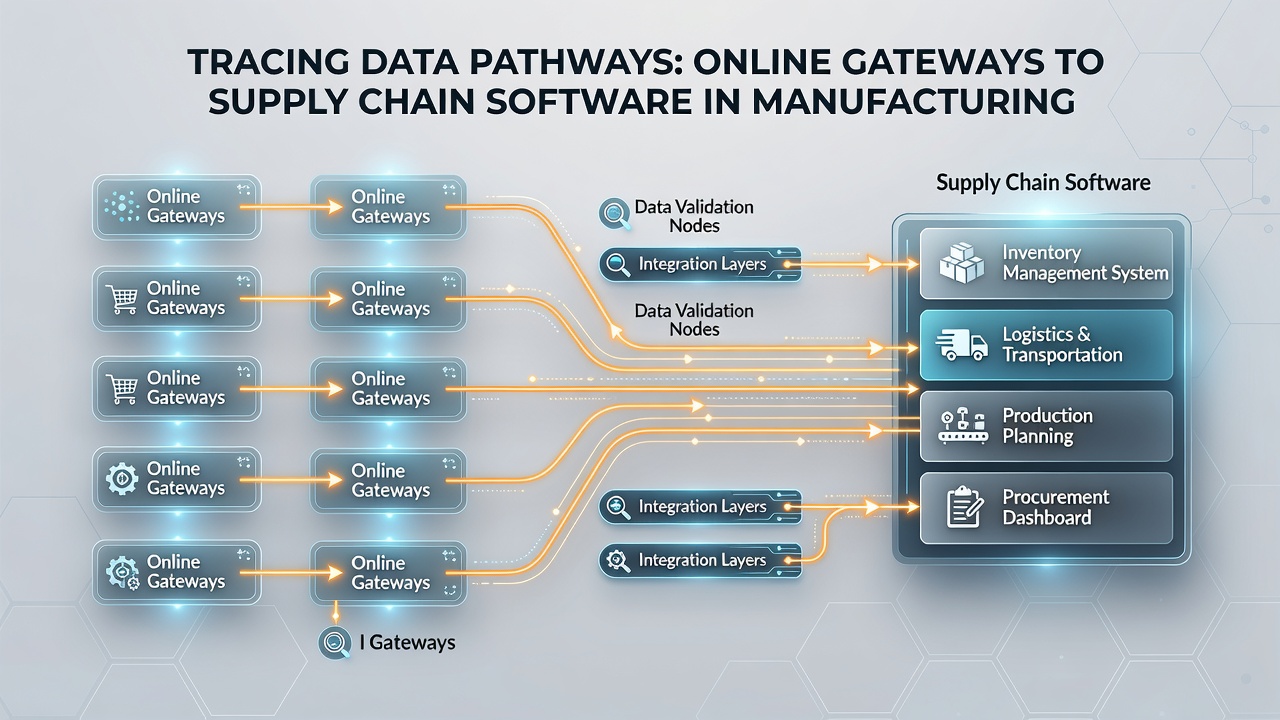
Online gateways function as intermediaries that process transaction details including order totals, customer identifiers, and payment confirmations, then pass verified data onward to enterprise resource planning modules. Supply chain software in turn updates stock levels, triggers replenishment orders, and adjusts logistics timelines based on that incoming information. Data indicates that manufacturers using synchronized platforms experience fewer discrepancies between confirmed sales and available inventory, particularly when real-time APIs link the two environments without manual intervention.
Standards bodies such as those affiliated with the International Organization for Standardization have documented protocols that govern how encrypted transaction records transfer into supply chain databases. These protocols specify field mappings for purchase orders, shipping addresses, and currency conversions so that downstream systems receive consistent inputs. In sectors producing automotive parts or electronics, such alignments allow production lines to adjust output based on incoming payment validations rather than waiting for batch updates at the end of each day.
Tracing Mechanisms and Visibility Tools
Tracing begins at the gateway endpoint where an authorization request originates, continues through middleware that translates payment formats into supply chain data structures, and ends at inventory adjustment records. Observers note that companies deploy logging frameworks to capture timestamps at each hop, enabling teams to reconstruct the sequence when discrepancies arise between a processed payment and a delayed material order. One study revealed that manufacturers implementing end-to-end tracing reduced reconciliation times by connecting gateway logs directly to warehouse management systems.
August 2026 marks the scheduled rollout of updated digital traceability requirements from several regional trade authorities, which will require documented data lineage for cross-border component purchases. These rules build on existing frameworks and emphasize verifiable pathways that link financial settlements to physical goods movement. Manufacturers preparing for the changes have begun testing enhanced API connections that embed unique transaction identifiers into supply chain records from the moment a gateway approves a purchase.
Regional Variations in Data Exchange Practices
North American manufacturers often route gateway outputs through centralized ERP hubs that consolidate data from multiple plants before updating regional distribution centers. European operations, by contrast, frequently segment pathways according to national data residency rules, which means transaction details may pass through localized nodes before reaching global supply chain views. NIST cybersecurity guidelines outline recommended controls for maintaining integrity during these segmented transfers.
Asia-Pacific facilities handling high-volume electronics assembly have adopted hybrid models where gateway data feeds into both cloud-based planning tools and on-premise execution systems. Reports from industry consortia show that these dual pathways support faster response to component shortages because payment confirmation triggers immediate visibility into supplier lead times across different time zones. The result appears in reduced idle time on assembly lines when material forecasts update within minutes of transaction approval.
Security and Compliance Considerations
Encryption standards applied at the gateway level must remain intact as data enters supply chain environments, so manufacturers implement tokenization layers that replace sensitive payment elements with reference codes before storage. This approach satisfies regulatory expectations while preserving the ability to trace which order number corresponds to which material allocation. Data from academic reviews of manufacturing networks indicates that such layered protections limit exposure during audits without disrupting operational flows.
Another Australian government analysis of digital manufacturing examined how compliance documentation travels alongside transaction data. The findings highlighted cases where automated tagging of records at the gateway stage allowed supply chain teams to generate required reports without manual data extraction, particularly for sectors subject to export controls on specialized components.
Conclusion
Effective tracing of data pathways between online gateways and supply chain software depends on consistent mapping, secure transfer protocols, and visibility tools that operate across the full sequence from payment authorization to material fulfillment. Manufacturers continue to refine these connections as new traceability mandates approach in 2026, focusing on systems that maintain accuracy while supporting production efficiency across multiple regions.